
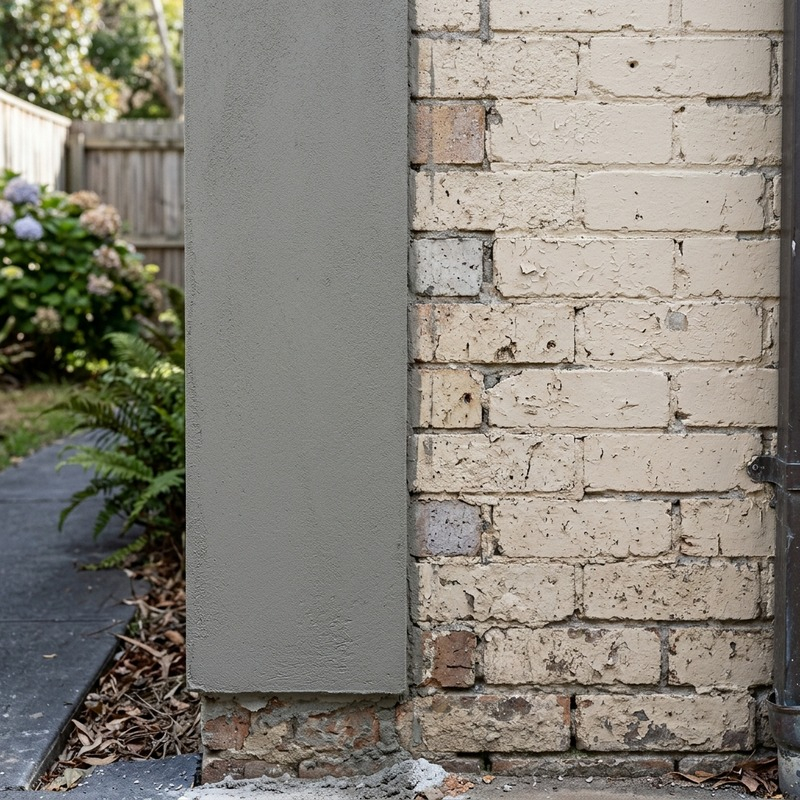
Can you render over painted brick? In most cases, yes, you can, but only once the paint has been tested, cleaned back and bonded properly, and only if the brickwork underneath is sound. I get asked this more often than almost anything else, usually by owners who have inherited a painted facade that looks tired and want a smoother, more modern wall without pulling the whole thing apart. The honest answer is that painted brick is a workable surface rather than an ideal one. It will carry a new coat for decades when the preparation is right, and it can let go within a season when it is not. A good share of the cement rendering across Sydney that ends up being redone comes back to a bond that was never going to hold in the first place, so this guide walks through what the wall needs before anything is mixed.
The short answer, and the one condition that decides it
Render will bond to a painted brick wall, but it bonds to the paint rather than to the brick, and that single fact drives everything else. So whether you can render over painted brick depends on one thing: if the paint film is firmly stuck to the masonry, a properly specified bonding system holds a new coat without trouble. If the paint is lifting, chalky or sitting on an older failing layer, the render inherits that weakness and comes away in sheets later.
Why paint changes the way render bonds
Traditional sand and cement mixes were designed to be absorbed. Bare brick pulls moisture out of the fresh mix, drawing the cement paste into the surface and locking the coat on mechanically. That suction is the key, and paint removes it. A sealed, low absorption film gives the mix nothing to grip, so the coat sits on the surface instead of keying into it.
Modern outdoor paints make this harder again. They are formulated to be flexible, water-shedding, and self-cleaning, which is unhelpful for anything you want to stick to them. Elastomeric and membrane-style coatings are the hardest of all, because they move independently of whatever goes over them.
Paint also slows the movement of moisture through a wall. Put a dense coat over a sealed film, and any water that gets in behind, through a cracked sill or a failed flashing, has fewer ways out. That shows up as bubbling or dark patches rather than a clean bond failure.
Checking the substrate condition before you commit
Three quick tests cover most of what you need. The first is a tap test. Run a knuckle or a screwdriver handle across the wall and listen. A dull note means the paint and brick behind it are intact. A hollow note means a void, and a void under paint becomes a void under render.
The second is a scrape test. Drag a scraper firmly across several spots, including the shaded southern side where damp lingers. Paint that resists is a candidate. Paint that peels in flakes or powders off on your hand is not.
The third is a tape test. Score a crosshatch into the paint, press strong tape over it and pull it off sharply. Paint coming away with the tape has already lost its grip.
Look at what the wall is doing structurally as well. Stepped cracking around openings, a crack that has widened over a season, or mortar you can rake out with a key all say the masonry needs attention first, which is why repairing cracks before any new coat goes on beats discovering the problem through a fresh finish six months later. Damp patches and white efflorescence need tracing too, because the moisture causing them keeps arriving.
How to prepare a painted brick wall for render
Assuming the paint passes those checks, the answer to can you render over painted brick becomes yes, and preparation runs in a set order.
- Wash the wall down. Pressure washing shifts dirt, chalking, mould and loose material, and the surface has to be clean and dry before anything else happens.
- Remove everything that is not firmly attached. Flaking and blistered areas get scraped or ground back to a sound edge, with the edges feathered so no step is left under the new coat.
- Create a key. On paint that means mechanical abrasion, scoring or grinding to break the film and expose texture. The more the surface is roughened, the less you ask chemistry to do alone.
- Apply a bonding system. Either a bonding agent made for low absorption surfaces or a polymer-modified slurry coat, applied strictly to the manufacturer’s coverage and open time figures.
- Consider reinforcement. Over a painted or mixed substrate, render mesh set into the base coat spreads movement instead of letting it concentrate into one crack.
- Build up in coats and cure them within the thickness the system allows, keeping each coat protected rather than rushing it on in full sun.
When stripping the paint is the better call
Sometimes the preparation adds up to more work than removal. Stripping is the better route when the wall carries several layers of old paint, when a flexible membrane coating has been used, when large areas fail the scrape test, or when the brick is a soft or heritage type needing a breathable system.
Removal runs from chemical strippers and steam to abrasive blasting, and the right choice depends on the brick, since soft older bricks damage easily. Stripping is not automatically superior either. A sound, well-adhered film with a proper bonding system is a reliable base, so the point is to match the method to what the wall is doing.
Which render system suits a painted wall
Several systems work over prepared paint, and each brings something different to the job.
A cement-based coat gives a dense, hard-wearing surface with real body, useful where the wall takes knocks or uneven brickwork needs levelling. An acrylic system is thinner, more flexible and forgiving of slight movement, which suits a mixed substrate. A texture coat delivers finish and colour in one application, keeping maintenance simple. All three are used routinely over prepared painted brick, and the fit depends on the wall and the look you are after.
Standards, licensing and getting the call right
Rendering and cladding work is covered by the National Construction Code, published by the Australian Building Codes Board, along with the Australian Standards it calls up, which set performance requirements for weatherproofing and external wall materials. In New South Wales, residential building work above a set value needs a licensed contractor, with the thresholds administered by NSW Fair Trading. Requirements are revised from time to time, so confirm the current position with both bodies.
Frequently asked questions
Can render stick to paint?
Yes, it can, but it sticks to the paint film rather than to the masonry underneath, so the bond is only ever as strong as the paint’s own grip on the brick. With a sound film, a proper mechanical key and a bonding agent or slurry coat made for low absorption surfaces, the result is durable. Over flaking, chalky or blistered paint it will fail.
Will plaster adhere to a painted wall?
Internal plaster behaves the same way. It needs either a mechanical key or a bonding primer, because a painted surface offers it no suction to work with. Most plaster products name a specific primer for sealed or previously painted surfaces, and using it is the difference between a coat that holds and one that drums off within a year.
How do you prepare a painted brick wall for render?
Wash the wall, remove all loose and blistered paint back to a sound edge, abrade or score the remaining film to create a key, apply the bonding agent or polymer modified slurry the render system specifies, add render mesh if the substrate is mixed or movement is likely, then build the coats up within the allowed thickness and cure them properly.
Is it better to strip the paint first?
It depends on the paint. Strip it when there are multiple old layers, when a flexible membrane coating is involved, when large areas are already failing, or when the brick needs a breathable system. If the paint is well adhered and the wall is sound, preparing and bonding over it is reliable and saves unnecessary work on the masonry.
Getting a straight answer on your own wall
If you are weighing up a painted facade and are not sure which way it should go, Jims Rendering Sydney has spent more than 15 years on Sydney walls and can tell you what your brickwork will carry. Our licensed team works Sydney-wide, so get in touch to arrange a look.


