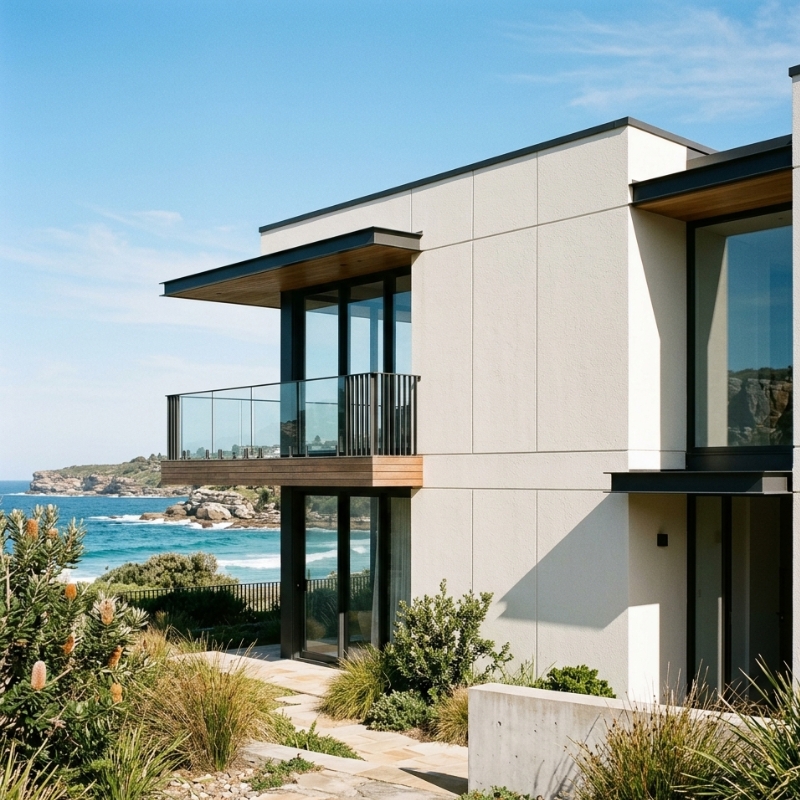
If you live anywhere from Bondi to the Northern Beaches, or you’re in a spot that cops strong onshore winds (even a few kilometres inland), your home’s exterior—polystyrene cladding, render, and coatings—is playing life on “hard mode”. Salt-laden air, wind-driven moisture, and Australia’s intense UV combine to age finishes faster than many homeowners expect.
The good news: most coastal damage follows predictable patterns. If you understand what’s happening and keep up with a few simple habits, you can slow the wear, avoid surprise repairs, and keep your exterior looking sharp for longer.
Why is coastal Sydney tougher than “normal weather”
Coastal exposure isn’t just “it rains more” or “it’s humid”. It’s the combination of:
• Salt particles in the air that settle on walls and hold moisture
• Wind that drives mist and rain into tiny gaps around edges and penetrations
• Strong UV that breaks down coatings, sealants and some surface finishes
• Temperature swings that expand and contract materials (especially darker colours in full sun)
Over time, these forces don’t just make things look tired. They can create pathways for water to get behind coatings and finishes, which is when you start seeing bubbling paint, rust stains, persistent efflorescence (white powdery residue), and cracks that keep coming back.
Quick reality check: “How close is close to the ocean?”
You don’t need to be beachfront to feel it.
• Beachfront / headlands / exposed ridgelines: constant salt deposition + wind loading
• 0–2 km from the water: frequent salt film, especially on windward elevations
• 2–5 km: still significant in sea-breeze corridors and elevated suburbs
• Beyond 5 km: exposure becomes more site-specific (wind direction, elevation, nearby waterways)
If your place gets a regular salty haze on glass, balustrades, or cars, your walls are getting it too.
What salt air actually does to your exterior
Salt doesn’t “eat” walls on its own. The big issue is that salt attracts and holds moisture. That thin salty film can keep surfaces damp longer, even when it hasn’t rained.
That longer “time wet” matters because it:
• Accelerates corrosion on metals (fixings, brackets, trims, lintels, balustrade connections)
• Encourages staining (rust bleed, brown streaks, black algae/mould spotting in shaded zones)
• Helps coatings lift when moisture gets behind them (blistering/bubbling)
• Makes porous surfaces cycle through wet/dry more aggressively, which can highlight hairline cracking
Where salt damage shows up first (most homes)
Start your inspections here:
• Window heads, sills, and corners (water collects, sealants fatigue)
• Cut edges and joints in cladding (tiny gaps become salt traps)
• Around penetrations: lights, taps, outdoor power points, meter boxes
• Downpipe straps and brackets (often mild steel under paint)
• Balconies and parapets (wind-driven spray + heat + movement)
• The windward side of the home (usually the side facing prevailing onshore winds)
What the Sydney sun does is that people underestimate
UV doesn’t just “fade colour”. It breaks down binders in paints and protective coatings, which leads to:
• Chalking (powdery residue when you rub the surface)
• Loss of water-shedding performance
• Brittleness in some sealants and coatings
• Faster cracking around joints and edges as flexibility reduces
Australia’s UV levels are routinely high. If you’re curious about how materials are tested for UV exposure and performance, ARPANSA has a useful overview of UV testing for films, glass and building materials. ARPANSA UV radiation testing information
Sun + salt is the multiplier
The sun heats surfaces, salt holds moisture, and wind drives movement. That combination stresses coatings and edges, which is why coastal homes often get:
• Blistering paint on the sunny side (moisture vapour pressure + coating breakdown)
• More pronounced movement cracks on hot elevations
• Faster breakdown at junctions (eaves lines, trims, sealant beads)
Cladding vs render: how each typically fails near the coast
Different exteriors fail differently, but there are a few “classic” coastal patterns.
Cladding: joints, edges, fixings, and water paths
Common coastal issues include:
• Joint movement and sealant fatigue (small gaps open and close)
• Edge swelling or lifting where water and salt sit repeatedly
• Corrosion of fixings or brackets (leading to staining and looseness)
• Coating breakdown and patchy fading on high-UV elevations
If you’re looking at upgrades or replacements, it helps to understand how systems manage water and movement as a whole, rather than focusing on one component. Some homeowners research systems like polystyrene cladding for external walls because they want a lighter solution with a finished exterior surface, but the long-term performance still depends heavily on detailing, sealing, and ongoing maintenance.
Render: hairline cracks, efflorescence, and delamination
Render is tough, but coastal conditions can expose weaknesses in:
• Substrate preparation (bond strength matters)
• Moisture management (water behind render causes recurring issues)
• Control joints and movement accommodation
• Edge detailing at windows, doors, and penetrations
Typical coastal render symptoms:
• Hairline cracking that reappears after patching
• White salt-like staining (efflorescence)
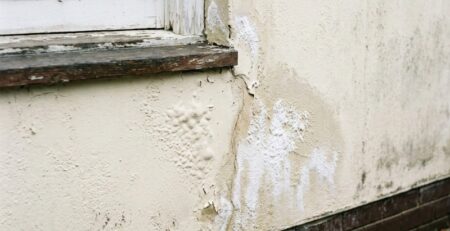
• Bubbling paint over render
• “Drummy” hollow sounds in areas where the render has lost adhesion
If your exterior is rendered, learning the right approach to maintaining rendered walls can be the difference between minor touch-ups and larger remedial work.
The coastal maintenance routine that makes the biggest difference
You don’t need to baby your walls. You need a predictable routine that removes salt and catches small issues early.
1) Rinse: the simplest habit with outsized payoff
A gentle rinse helps remove salt film before it accumulates.
Suggested cadence (adjust for exposure):
• Beachfront/exposed: every 2–4 weeks during windy periods
• 0–2 km inland: every 4–8 weeks
• 2–5 km inland: every 2–3 months, or after big onshore weather
Use low pressure. Think “garden hose rinse”, not blasting.
2) Wash: occasional deeper clean (without damaging finishes)
Every 6–12 months (or more often in harsh spots):
• Use a soft brush or sponge and a mild, pH-neutral cleaner
• Work top-down to avoid streaking
• Rinse thoroughly so residue doesn’t attract grime
Avoid:
• Aggressive acids on cementitious surfaces unless you know what you’re doing
• High-pressure water close to joints, edges, or cracks
• Scrubbing that removes protective coatings
3) Inspect: 20 minutes that can save thousands
Do a slow walk-around twice a year (and after big storms).
Look for:
• New cracks or cracks that have widened
• Peeling, bubbling, or chalking paint
• Rust stains at fixings or along edges
• Soft/swollen edges, gaps opening at joints
• White powdery residue that returns quickly after cleaning
• Damp staining that doesn’t dry out
4) Touch-up early: seal small entries before they grow
Small maintenance tasks have compounding benefits:
• Re-seal tired sealant beads around penetrations
• Touch up chipped coatings before salt gets underneath
• Address localised rust staining before it spreads
• Keep drainage points and weep paths clear (where relevant)
Q&A: Why is my exterior paint bubbling near the coast?
Paint bubbling is usually a moisture story.
Near the coast, salt film keeps the surface damp longer. If moisture is trapped behind the coating (from tiny cracks, failed sealant, or water tracking behind edges), heat from the sun can turn that moisture into vapour pressure. The coating lifts, forming blisters.
What helps:
• Identify the moisture entry point first (don’t just repaint)
• Remove failed coating properly (not spot-painting over loose sections)
• Let surfaces dry fully before recoating
• Use coatings suited to exterior UV and exposure
Q&A: Is efflorescence always a serious problem?
Not always, but it’s a useful clue.
Efflorescence is salt residue carried to the surface by moisture moving through a porous material (like render or masonry). A one-off patch after heavy rain might be minor. But if it keeps returning in the same spot, it suggests ongoing moisture movement behind or within the wall system.
Repeated efflorescence often means:
• A persistent leak path (crack, failed sealant, poor flashing detail)
• Moisture trapped behind coatings
• Drainage issues at a sill line or junction
Coastal hotspots: the “most punished” parts of a Sydney home
If you only have time to focus on a few zones, start with these:
Windward elevation
The side facing prevailing winds gets the most salt deposition and wind-driven rain.
Western and north-western faces
These often take the strongest afternoon sun, so coatings can age faster and movement can be more pronounced.
Under eaves and shaded corners
These can stay damp longer, which encourages algae/mould spotting and staining.
Balconies, parapets, and exposed edges
Edges heat up, move, and catch spray. Small failures here can lead to stains and water tracking.
A simple “distance-to-the-beach” maintenance checklist
If you’re beachfront or highly exposed
• Rinse monthly (or more in windy periods)
• Wash every 6 months
• Inspect quarterly
• Touch up chips and sealants promptly
If you’re 0–2 km inland
• Rinse every 1–2 months
• Wash every 6–12 months
• Inspect twice a year
If you’re 2–5 km inland
• Rinse every 2–3 months (or after strong onshore weather)
• Wash annually
• Inspect twice a year
When a “small symptom” is actually urgent
Some signs suggest more than superficial wear:
• Bubbling/peeling over a wide area (not just one patch)
• Cracks that reappear quickly after patching
• Rust bleed that keeps spreading from the same point
• Hollow/drummy areas in render (possible loss of adhesion)
• Damp staining indoors that lines up with exterior issues
• Persistent mould or algae that returns rapidly after cleaning
If you’re at the “pattern keeps repeating” stage, it’s worth learning what a proper assessment looks like and what a durable fix involves. Some homeowners explore solutions like polystyrene cladding installation in Sydney as part of broader exterior upgrades, but whatever the system, the long-term win is always good detailing plus consistent maintenance.
FAQ
How often should I wash my exterior if I live near Bondi, Coogee, or Manly?
A good baseline is a gentle rinse every 4–8 weeks and a deeper wash every 6–12 months, adjusting for exposure. If your windows and balustrades show salty haze often, increase the rinse frequency.
Will high-pressure cleaning remove salt faster?
It can remove salt, but it can also force water into joints, cracks, and edges, and it can damage coatings or softer finishes. A low-pressure rinse plus a gentle wash is usually safer for long-term performance.
Why does the sunny side of my house look worse than the shaded side?
High-UV elevations often fade, chalk, and crack sooner. Shaded sides may stay damp longer and show more mould/algae spotting. Coastal homes commonly have different problems on different faces.
Is coastal corrosion only a problem for metal roofs and gutters?
No. Corrosion can show up in brackets, fixings, trims, balustrade connections, and even hidden fasteners behind exterior finishes. Rust staining on walls often traces back to small metal components.
Can salt air cause render to crack?
Salt doesn’t directly “crack” render, but it contributes to moisture cycling and keeps surfaces damp longer. Combined with movement and UV-driven coating breakdown, that can make cracking and staining more noticeable and more persistent.
What’s the earliest warning sign I should never ignore?
Recurring stains in the same spot (rust bleed, efflorescence, damp marks) and bubbling paint are big ones. They usually indicate a moisture pathway that will keep worsening until it’s properly addressed.