
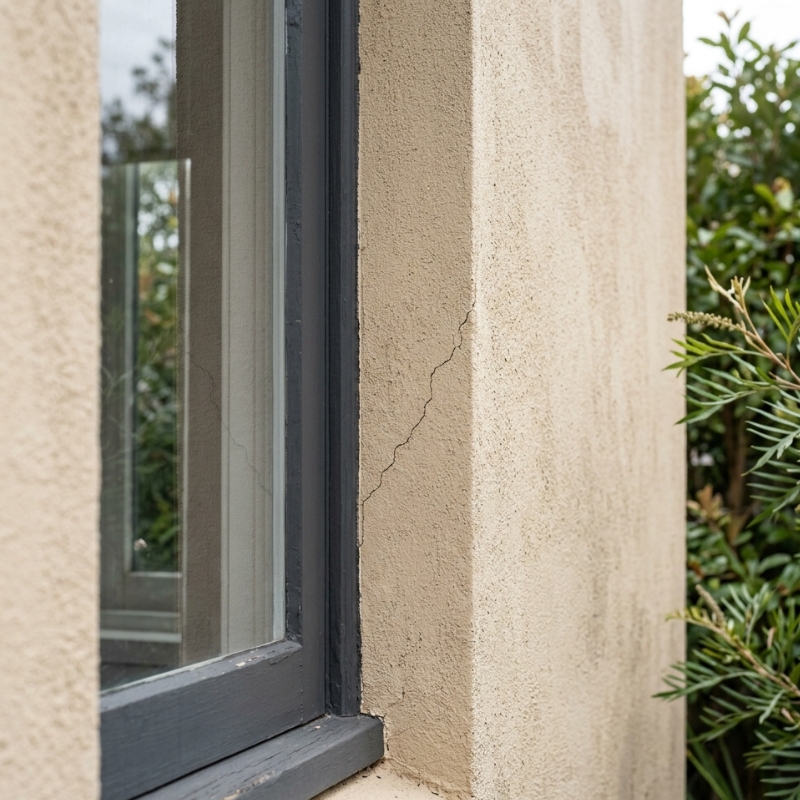
Render is designed to protect and improve the look of your home’s exterior, but like any outer layer, it can start to break down. The tricky part is that render often “fails quietly” at first: a faint crack here, a bit of staining there, paint that suddenly won’t hold. If you catch those early warnings, you can usually prevent bigger issues like widespread debonding, ongoing damp, or expensive rework.
This guide is written for Sydney conditions—salt-laden coastal air, wind-driven rain, hot/cool cycles, and a mix of older brick homes and newer builds—so you can understand what’s normal, what’s not, and what to do next.
What “failing render” actually means
Render failure isn’t one single problem. It’s a catch-all for a few different breakdowns, including:
• Surface breakdown (powdering, chalking, fine “crazing” cracks)
• Loss of adhesion (render separating from the wall, often called delamination or “drummy” patches)
• Moisture-driven issues (bubbling, blistering paint, efflorescence, damp marks)
• Structural movement showing through (cracks driven by movement in the substrate—brick, block, or framing)
In Sydney, the most common driver behind “sudden” render issues is moisture getting where it shouldn’t—often through small entry points around windows, rooflines, balconies, or ground-level splash zones. Heat cycling and natural building movement then make the symptoms more obvious over time.
The Sydney factors that accelerate render problems
A render finish that looks fine in one suburb might struggle in another. A few local factors that can speed up failure:
• Coastal salt exposure (especially within a few kilometres of the ocean): salt can attract moisture and contribute to staining and recurring salt deposits
• Wind-driven rain: west/east-facing walls that take the brunt of storms can show earlier water marks and paint breakdown
• Hot days, cool nights: repeated expansion and contraction can widen existing hairline cracks
• Shaded, damp elevations: south-facing walls and narrow side passages can stay damp longer, encouraging mould and algae
• Older homes: older brickwork and reactive soils can contribute to movement cracks that telegraph through finishes
None of this means render “doesn’t work” in Sydney. It just means the early warning signs matter, and the cause is rarely “just cosmetic” if it keeps returning.
The early warning signs of failing render (and what each one suggests)
1) Hairline cracking that keeps spreading
Hairline cracks can be normal, especially in older homes, but pay attention to the pattern and whether it’s changing.
Common patterns you might see:
• Fine “crazing” (spiderweb cracks): often surface-level shrinkage, but can become a water pathway if widespread
• Straight cracks near corners or joins: movement or stress points
• Cracks around windows/doors: movement concentrated at openings, or water entry impacting the substrate
What’s worth watching in Sydney:
• Cracks that grow after heavy rain or a run of humid weather
• Cracks that reappear after painting
• Cracks that turn into “step cracks” (stair-step pattern), which can indicate movement in the underlying masonry
A simple rule: a crack that changes over time is more concerning than one that stays stable for years.
2) Bubbling, blistering, or “puffed” areas
Bubbles or blisters often suggest moisture trapped under paint or within/behind the render. In coastal Sydney, salt and moisture cycles can make this worse.
Look for:
• Paint bubbles that pop and reveal damp or powdery material
• Blisters concentrated near the base of walls, under windows, or near downpipes
• A “soft” feel when pressed (don’t push hard—just observe)
This is one of the clearest early warnings that water is involved. If you only treat the surface (e.g., scrape and repaint), it usually returns.
3) Hollow-sounding patches when tapped (the “drummy” test)
If the render starts separating from the wall, it can sound hollow when you gently tap it.
How to check safely:
• Use your knuckles or the rubber end of a screwdriver handle
• Tap lightly in a grid pattern over a suspicious area
• Compare the sound to a section that seems solid (a hollow “drum” tone vs a dull “thud”)
What it suggests:
• Loss of adhesion between render and substrate (delamination)
• Often linked to moisture ingress, poor bonding, or incompatible layers beneath
If a hollow patch is growing, that’s a sign the bond is failing and may eventually loosen or fall away.
4) Flaking, crumbling, or sandy/powdery render
Render shouldn’t shed material easily. If you can rub the surface and it powders heavily, or if edges crumble, that’s a breakdown.
Typical causes:
• Surface weathering over time
• Salt and moisture cycling
• Poor curing or incorrect mix/application for the conditions
• Long-term water exposure from leaks, overflow, or splashback
In Sydney, check the base of walls, garden edges, and any spot where sprinklers or runoff regularly hit the same area.
5) Staining that follows rain patterns
Stains often tell you where water is travelling.
Common stain shapes:
• Vertical streaks beneath windows or balcony edges
• Dark patches at the bottom of walls (splash zone)
• Marks near gutters/downpipes or where water overflows in storms
If the stain darkens after rain and lightens during dry weeks, it’s a strong hint of active moisture movement.
6) White, chalky deposits (efflorescence) that keep coming back
That white powdery residue is often salts being carried to the surface by moisture. A one-off bloom can happen, but repeated efflorescence is a clue that moisture is moving through the wall system.
Pay attention to:
• You clean it, and it returns within weeks
• It’s concentrated around a crack, joint, or the base of the wall
• It appears with bubbling paint or hollow patches nearby
7) Mould, algae, or persistent “green” growth
On shaded walls or damp side passages, biological growth can show up where moisture lingers. It’s not always a render failure on its own, but it’s a sign the wall is staying damp too long.
In Sydney, check:
• South-facing walls
• Narrow boundary gaps with limited airflow
• Areas near air-con drainage outlets or poorly directed downpipes
8) Paint that won’t stick (peeling, patchy gloss, or weird texture)
If paint keeps peeling off rendered walls, it’s often because the substrate is damp, dusty/chalky, or the wrong paint system was used over an incompatible surface. Repainting without solving the cause is like putting a sticker over a leak.
If you want background on how different systems behave, you can learn about cement rendering so you can better interpret what you’re seeing on your own walls.
Quick homeowner checks you can do (without making it worse)
You don’t need special tools to gather useful information. The goal is to observe patterns and identify whether moisture or adhesion is involved.
Do a “two-weather” inspection
• Inspect after a dry spell (what remains visible?)
• Inspect again 24–48 hours after rain (what changes?)
If new dark patches appear after rain, or bubbles feel more pronounced, that points strongly to moisture.
Photograph and measure
• Take photos from the same angle each time
• Add a coin or tape measure in the shot for scale
• Note the date, recent weather, and which wall elevation it’s on (north/south/east/west)
Map the symptoms
On a simple sketch or notes app, mark:
• Cracks (location, length, direction)
• Bubbling or blistering areas
• Hollow-sounding patches
• Stains and where they begin/end
Patterns matter. For example, a vertical stain starting under a window sill tells a different story than random spots across a wall.
Q&A: Are hairline cracks in render normal?
Hairline cracks can be common, especially as buildings settle or surfaces age. The concern is less about a single hairline crack and more about change over time.
Watch more closely when:
• Cracks widen, lengthen, or multiply
• Cracks cluster around openings (windows/doors)
• Cracks coincide with staining or efflorescence
• You notice a hollow/drummy sound nearby
If you’re unsure whether a crack is cosmetic or a symptom of movement/moisture, treat it as a signal to monitor and investigate rather than immediately painting over it.
The biggest “false alarms” Sydney homeowners mistake for render failure
Sometimes the render looks like the problem, but the real cause is elsewhere.
Roof and gutter overflow
Sydney downpours can overwhelm gutters if they’re blocked or undersized. Overflow often creates vertical staining and damp zones that mimic render breakdown.
Window flashings and sill edges
Water entry around windows can show as bubbling paint beneath the sill or cracking at corners.
Garden beds and ground levels
Soil or mulch piled against walls can trap moisture and allow salts to migrate upward. This can trigger recurring efflorescence and base-level deterioration.
Hard landscaping splashback
Paths and driveways can bounce rainwater onto lower walls, especially during storms. You’ll often see a consistent band of staining or breakdown at the same height.
When failing render becomes urgent
Some signs deserve quicker attention because they can indicate ongoing moisture damage or safety risks.
Treat these as higher priority:
• Render that sounds hollow across a wide area (debonding can spread)
• Sections that are lifting, bulging, or visibly separating
• Damp patches inside the home on the same wall line as exterior symptoms
• Cracks that become wide or stepped, especially on older brickwork
• Repeated efflorescence plus paint blistering (persistent moisture movement)
For a broader understanding of what can influence performance and lifespan, it helps to read up on cement rendering for external walls and how substrates, exposure, and moisture management change outcomes.
What to do next (practical, non-sales steps)
If you’ve spotted one or more warning signs, here’s a sensible sequence that avoids guesswork.
1) Stop the “cover-up cycle”
Avoid repeatedly scraping and repainting until you understand whether moisture or adhesion is involved. Cosmetic fixes don’t hold if the wall is still wet or the render is separating.
2) Check obvious water sources first
• Gutters/downpipes: blockages, overflow marks, leaks at joints
• Rooflines and flashings: visible gaps or water tracking
• Window sills: cracked sealant, gaps at corners
• Garden/ground: soil or mulch too high, sprinklers hitting the wall
3) Decide: monitor, patch, or investigate
A practical triage approach:
• Monitor if: tiny stable hairline cracks, no staining, no hollow areas, no bubbling
• Patch/investigate if: recurring cracks, early bubbling, isolated drummy patch, persistent staining
• Investigate promptly if: widespread drummy areas, bulging, repeated efflorescence, internal damp
If you want to compare finishes and understand why some issues present differently, this overview on understanding cement render finishes can help you interpret what you’re seeing without jumping to conclusions.
4) Use an authoritative defect reference for context
If you’d like a reliable baseline for how defects are described and categorised, the NSW Government’s Building Defects Library is a useful reference point: NSW Building Defects Library.
Q&A: What does bubbling render usually mean?
Bubbling most commonly indicates moisture trapped beneath the coating system (paint) or within/behind the render. That moisture might be entering from above (gutters/windows), from the side (wind-driven rain), or from the base (splashback/ground moisture).
If bubbling is localised:
• It may be linked to a specific entry point (e.g., under a window)
If bubbling is widespread:
• It may be a broader moisture management issue, or an incompatible coating system applied over a damp/chalky surface
Either way, bubbling is a symptom worth investigating, not just repainting.
Q&A: How do I know if render is coming off the wall?
The classic sign is a hollow or “drummy” sound when gently tapped, sometimes paired with visible bulging or hairline cracking around the edges of the affected patch.
Other signs include:
• A crack that outlines a patch (like a border)
• Render that flakes off in larger pieces rather than dusting away
• A slight change in surface level or feel compared to the surrounding areas
If you suspect debonding, avoid heavy tapping or chiselling—loosening a section can create a safety hazard.
How to prevent minor symptoms from turning into major failure
Sydney homes don’t need perfection—just consistent moisture control and early action.
A prevention checklist:
• Keep gutters and downpipes clear before storm season
• Ensure water drains away from walls (especially at the base)
• Avoid continuous sprinkler spray onto walls
• Maintain seals and edges around windows where gaps form
• Keep an eye on shaded walls that stay damp longer
• Re-check hairline cracks once or twice a year and after major weather events
FAQ
How long should exterior render last in Sydney?
It varies by exposure, substrate condition, and moisture management. Homes in higher exposure coastal areas or with frequent wetting (overflow/splashback) often show symptoms earlier than sheltered elevations. The key is regular inspection, so small issues don’t become systemic.
Is white powder on render always a problem?
Not always. A one-off efflorescence bloom can occur, but repeated deposits often indicate moisture moving through the wall system. If it keeps returning, look for the water path.
Should I seal cracks in render straight away?
Small hairline cracks can often be monitored first, but if cracks are widening, reappearing after repair, or associated with staining, it’s better to investigate the cause before sealing and painting.
Can failing render cause damp inside the house?
Yes—if moisture is getting behind the exterior finish and into the wall system, it can contribute to internal damp, peeling paint, or mould (especially in cooler, shaded rooms).
What’s the difference between surface crazing and serious cracking?
Crazing is usually fine, shallow, and web-like. More serious cracking tends to be wider, longer, repeat in the same locations, or form stepped patterns that can reflect movement in masonry.
If paint is peeling, does that mean the render is failing?
Not necessarily, but it can be a sign of damp, chalky surfaces or coating incompatibility. Peeling that repeats quickly after repainting often means the underlying issue wasn’t addressed.


