
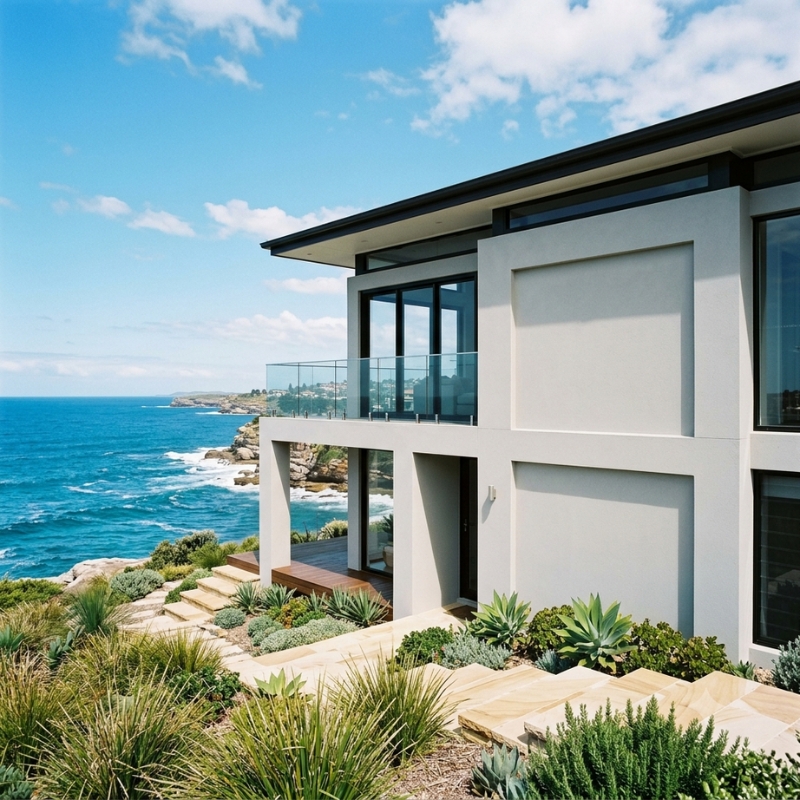
A cool sea breeze is one of the biggest perks of owning a home in Bondi, Cronulla or Collaroy. Unfortunately, that same breeze carries salt crystals that can pit, stain and weaken exterior finishes. Mix in Sydney’s fierce summer UV and gusty southerlies, and you have a recipe for premature cracking and discolouration if the wall coating isn’t prepared for it. Before you resign yourself to repainting every few years, it helps to understand exactly how the coast accelerates wear and which prevention steps actually work. Below we break down the science of salt-air damage, early warning signs, smart product choices and simple routines that can add years to your render’s lifespan. If you’re planning a new façade or a full refresh, tapping into our cement rendering experts early will also help you avoid costly do-overs down the track.
1. Why Does Salt-Air Punish Cement Render?
Sydney’s oceanfront suburbs endure a constant mist of chlorides that travel kilometres inland on wind and humidity. When those microscopic salt particles settle on porous cement render they start a chain reaction:
- Crystallisation inside pores – Moisture dissolves the salt. When the wall dries, crystals reform, expand and create micro-fractures.
- Chemical attack – Chlorides react with calcium hydroxide in cement paste, weakening the binder.
- Hygroscopic action – Salt attracts more moisture, keeping the render damp for longer and encouraging algae or mould growth.
- UV amplification – Salt deposits roughen the surface, making UV rays chew through pigments faster and ramping up colour fade.
Because these processes work together, a wall that looks fine on Monday can suddenly show powdery patches by summer’s end. The risk is higher within two kilometres of the shoreline, but strong nor’easters can push salt well into the inner suburbs on hot days.
2. Spotting Early Signs Before Hairline Cracks Spread
Minor surface changes often appear months or even years before chunks start falling off. Keep an eye out for the cues in the table below so you can act before repairs become structural.
| Situation | What It Can Mean | Suggested Action |
| White, dusty bloom after rain | Efflorescence from soluble salts rising to the surface | Rinse gently, allow to dry, then apply breathable sealer if repeated |
| Faint spider-web cracks (≤1 mm) | Drying shrinkage aggravated by salt | Monitor; repaint with flexible membrane if growth stops |
| Surface feels “sandy” to touch | Binder deterioration and loss of fines | Light scrub, re-prime and over-coat before erosion deepens |
| Green or black algal streaks | Dampness held by hygroscopic salt | Clean with low-pressure wash, improve drainage and apply a mould-resistant finish |
| Peeling paint exposing grey render | UV and salt-lifting incompatible paint system | Strip loose layers, check render adhesion and choose a marine-grade topcoat |
Most of these issues are cosmetic at first. Acting early prevents salt from migrating deeper, where it can disrupt the bond between render and masonry.
3. Choosing the Right Render Mix for Coastal Conditions
Not all cement renders perform the same around salt. When you’re selecting or specifying a system, weigh up the following options.
3.1 Traditional sand-cement render
Pros: Breathable, cost-effective, readily available.
Cons: Higher porosity, limited crack resistance, needs painting or sealing.
Best for: Budget-conscious projects more than 3 km inland.
3.2 Polymer-modified cement render
Pros: Added acrylics improve flex and reduce water absorption, better bond to the substrate.
Cons: Slightly dearer materials and application know-how.
Best for: Homes within 1–3 km of the coast seeking extra durability.
3.3 Thin-coat acrylic render systems
Pros: Very low permeability, wide colour range, built-in finish, excellent crack-bridging.
Cons: Substrate preparation must be meticulous; higher initial cost.
Best for: Direct beachfront properties or areas exposed to heavy wind-driven rain.
A good rule of thumb is to step up one durability level for every kilometre closer you are to breaking surf. That might mean polymer-modified on a Manly hilltop and full acrylic on Dee Why Esplanade.
4. Surface Preparation: The Non-Negotiables
Even the best coating fails if it sits on loose salts or dusty bricks. Professional applicators follow a strict prep checklist:
- Salt testing – Wipe walls with distilled water and litmus paper; visible chloride streaks need neutralising.
- Fresh-water washdown – Low-pressure rinse to remove salts without driving water too deep.
- Soundness check – Tap the wall; hollow sounds indicate existing delamination that must be hacked off and patched.
- Alkali-resisting primer – Seals residual lime, balances pH and improves adhesion.
- Mesh at stress points – Embed fibreglass mesh around windows and doors to dissipate movement.
Skipping any prep step almost guarantees blistering or peeling once the north-easterlies pick up.
5. Protective Finishes That Work in Sydney’s Salt-Spray Zone
If your render is already in good shape, upgrading the final layers often delivers the biggest longevity boost.
| Finish Type | Key Benefit | Lifespan Near Coast | Extra Notes |
| High-build acrylic texture (2-3 mm) | Fills micro-cracks, flexible, weatherproof | 12–15 years | Needs compatible primer |
| Elastomeric membrane paint | Stretchy film bridges hairline cracks | 10–12 years | Recoatable without stripping |
| Nano-silane/siloxane clear sealer | Penetrates and repels water while breathing | 8–10 years | Re-apply sooner on sun-blasted walls |
| Mineral silicate paint | Chemical bond with render, highly breathable | 15–20 years | Limited colour palette |
Whichever route you choose, insist on products rated “C5-M” (very high marine) under ISO 12944 or equivalent, especially if you’re investing in a new build.
6. Low-Tech Maintenance Habits That Save High-Cost Repairs
Many homeowners assume render is a set-and-forget job. Along the coast, a few simple routines can double the service life:
• Quarterly hose-down – A light mains-water rinse every season dissolves fresh salt before it hardens.
• Check roof and gutter – Overflow drips concentrate salts; clear leaves after storms.
• Shield vulnerable zones – Stainless steel flashing or drip edges on parapets reduce run-off streaks.
• Prompt touch-ups – Seal small chips within a fortnight so chlorides don’t reach the substrate.
• Garden management – Keep dense shrubs 200 mm away; leaves trap moisture against walls.
Set a reminder on the first weekend of each season, and the job rarely takes more than half an hour.
7. When to Call a Professional vs DIY
Paint shops may tell you “any weekend warrior can roll on membrane paint”, but coastal issues are sneakier than standard weathering. Use the decision pointers below to stay safe.
| Task | DIY Friendly? | Why / Why Not |
| Seasonal hose-down, visual check | Yes | Low risk, no specialist tools |
| Patching hairline surface cracks | Maybe | Needs compatible filler; errors obvious on textured finish |
| Replacing loose or hollow render | No | Must cut back to sound substrate, match mix and feather edges |
| Applying high-build texture or membrane | Skilled DIY only | Uniform film build critical; spray equipment often required |
| Diagnosing widespread damp or salt bloom | No | Moisture meters and chloride testing kits needed for accurate cause analysis |
If multiple hollow spots, deep cracks or damp patches appear within a single season, a qualified renderer or building diagnostician should inspect before you re-coat.
8. Questions to Ask Before Selecting a Coastal Render System
Thinking about building or renovating near the shore? Clarify these points with any builder, architect or renderer:
- Which render class (CS1, CS2 or CS3) does your mix meet under AS 4551?
- Is a salt-neutralising wash included in the prep specification?
- Will you embed mesh at all window and door corners?
- What topcoat system do you recommend for C5-M exposure and why?
- How many wet film thickness checks will you log during application?
- Can you provide maintenance guidelines specific to my suburb’s microclimate?
Their answers reveal whether they truly understand coastal demands or are quoting a one-size-fits-all product sheet.
9. Official Resources and Compliance Notes
Building near the ocean often triggers stricter durability clauses in BASIX certificates and local council development consents. You’ll find a helpful overview in the Australian Government’s YourHome guide on external wall materials, including recommended exposure classes, coating systems and maintenance intervals. Cross-checking render specifications against those tables is a smart safeguard before signing a contract.
10. Final Thoughts
Sydney’s coastal lifestyle needn’t come with constant render worries. By selecting the right mix, enforcing disciplined surface prep and adopting a rinse-check-seal habit, you can keep salt crystals at bay and enjoy a crack-free façade for well over a decade. Should new or recurring issues crop up, early professional assessment generally costs far less than stripping back a whole wall later.
FAQs
- Can I just paint over existing efflorescence to hide it?
Painting without removing salts is a short-term fix. The crystals will keep forming underneath, lifting fresh paint within months. Always wash and neutralise first. - How far inland does salt-air damage remain a concern in Sydney?
While the highest risk is within two kilometres of breaking surf, strong onshore winds have carried measurable chlorides up to five kilometres inland on peak summer days. If you can smell the sea on a hot afternoon, your walls collect salt. - Are clear nano-sealants worth the extra cost?
They’re not magic shields, but a quality silane or siloxane sealer can reduce water absorption by 90 per cent and make seasonal wash-downs more effective. They’re a sensible add-on if you prefer exposed render rather than painted finishes. - Will stainless steel fixtures completely eliminate rust stains on render?
Stainless fittings resist corrosion far better than galvanised options, yet tea-staining can still occur in marine zones. Regular fresh-water rinses and choosing 316-grade (not 304) stainless steel keep brown streaks to a minimum. - Does flexible acrylic render breathe enough for older brick homes?
Premium acrylic systems are vapour-permeable despite being water-resistant. They allow interior moisture to escape while blocking liquid water ingress, which is crucial where rising damp is controlled but not fully eliminated.


