Building or renovating a Sydney home and weighing up foam cladding against traditional render? They can look similar once they’re finished, but underneath they’re very different, and the right choice affects your insulation, your budget and your walls. This guide compares foam (EPS) cladding and traditional render in plain terms for Sydney homes. Jim’s Rendering Sydney installs both cladding and render across Sydney, so here’s how they stack up and which tends to suit which project.
| Quick answer
Foam (EPS) cladding is lightweight polystyrene fixed to the wall and rendered over, adding insulation and a smooth modern facade, ideal where thermal efficiency matters. Traditional render is applied straight onto brick or block and is hard-wearing but adds no insulation. The right choice depends on your walls, budget and how much insulation you want. |
What is foam / EPS cladding?
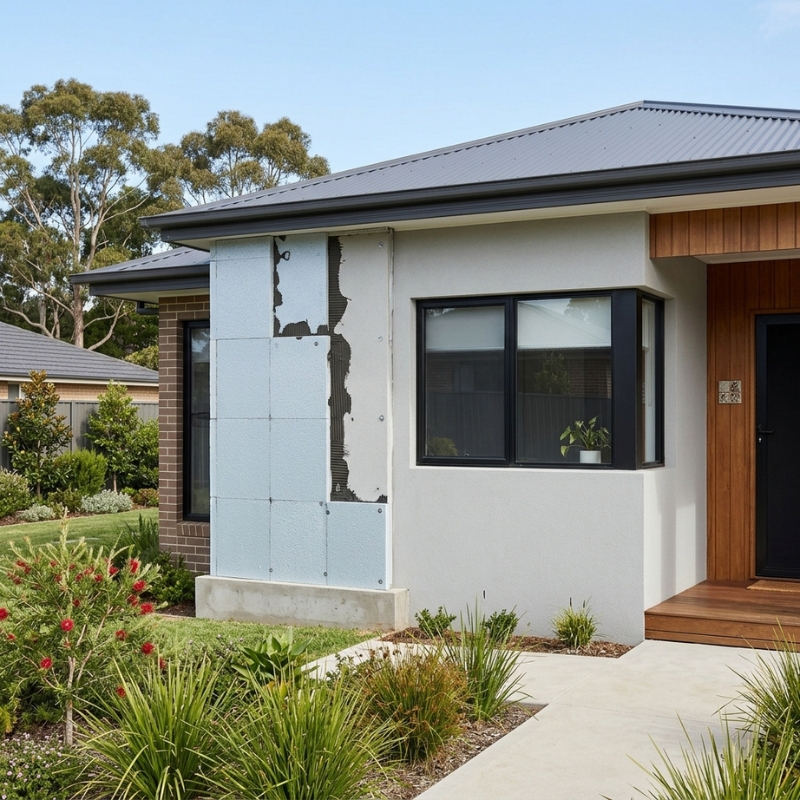
Foam cladding, or EPS cladding, uses lightweight expanded polystyrene panels fixed to the outside of the wall, which are then rendered over to give a smooth, solid-looking finish. EPS stands for expanded polystyrene, the same lightweight foam you’ll recognise from packaging, but here it’s a structured cladding board made for the job. The big drawcard is insulation: that foam layer adds a thermal blanket around the house, which can make it more comfortable and more energy-efficient. It’s light, so it can go onto timber-framed walls as well as masonry, and it delivers that clean, contemporary rendered look without needing a masonry wall underneath. Once it’s rendered and finished, you often can’t tell it apart from solid render from the street. A professional polystyrene cladding installation fixes the panels correctly and renders over them as one integrated system.
What is traditional render?
Traditional render is a cement- or acrylic-based coating applied straight onto a masonry wall, brick or block, with no foam layer in between. It’s the classic approach, and it’s genuinely hard-wearing: a solid, dense finish bonded directly to the wall. What it doesn’t do is add insulation, since it’s a thin coating on the wall rather than a thermal layer around it. So it’s about protecting and finishing the wall you’ve already got, not improving its energy performance. For a solid brick or block home that just needs a durable, good-looking finish, cement rendering is the straightforward, cost-effective choice, and it’s been proven on Australian homes for generations. On a home that already has good, solid walls, adding a foam layer often isn’t necessary, which is part of why render remains the popular, practical choice for masonry houses.
Foam cladding vs render: side by side
Here’s the quick comparison, in relative terms rather than dollar figures.
| Feature | Foam (EPS) cladding | Traditional render |
| Insulation | Adds a thermal layer | None |
| Weight | Very light | Heavier coating |
| Look | Smooth, modern | Smooth to textured |
| Best on | Timber frame or masonry | Solid masonry |
| Durability | Good; protected by render | Very hard-wearing |
| Relative cost | Higher | Lower |
| Fire | Combustible core; needs a compliant system | Non-combustible coating |
Is foam cladding safe and compliant?
This is the question everyone asks, and it deserves a straight answer. EPS is a foam, so the core is combustible, which is why cladding fire safety has been in the news. The important context is that the strict combustible-cladding rules and non-combustible wall requirements apply mainly to multi-storey and apartment buildings, following high-profile fires. Detached houses are treated differently, and EPS cladding remains a common, accepted choice for homes when it’s installed correctly as part of a proper, compliant rendered system. The key is using compliant materials and a professional installer, not a shortcut. We cover this in more detail in our guide on whether polystyrene cladding is safe, and if fire safety is a concern for your project, it’s worth confirming the current requirements for your building type before you commit.
Which suits your Sydney home?
So which way should you go? It comes down to what your project needs. If insulation and energy efficiency are a priority, or you’re working with timber-framed walls, or you want that smooth modern facade without a masonry wall behind it, foam cladding makes a lot of sense, since it finishes and insulates in one system. If you’ve already got solid brick or block walls and you mainly want a durable, attractive, cost-effective finish, traditional render is hard to beat, and it’s the more budget-friendly option up front. Budget plays in too: cladding usually costs more because you’re paying for the insulation layer and the system, while render is a simpler coating on an existing wall. There’s no universally right answer; the best choice depends on your walls, your budget and how much you value insulation. An on-site look at your place makes the decision clear, and we’ll give you a straight recommendation rather than pushing one option. For a lot of renovations, it comes down to a simple question: are you mainly after a fresh, durable look, or are you also chasing warmer winters and cooler summers?
Frequently asked questions
Does foam cladding improve energy efficiency?
Yes. The expanded polystyrene layer in foam cladding acts as insulation around the house, helping to keep it warmer in winter and cooler in summer and reducing heat transfer through the walls. That can improve comfort and lower energy use. Traditional render, by contrast, is a surface coating and doesn’t add an insulation layer.
Can you render over foam cladding?
Yes, rendering over the foam is part of how the system works. The EPS panels are fixed to the wall and then rendered to give a solid, weather-resistant, smooth finish, so the foam is never left exposed. It’s installed as one integrated cladding-and-render system rather than two separate jobs, which is why professional installation matters.
Is EPS cladding fire-safe?
EPS has a combustible core, so it must be installed as part of a compliant, professionally fitted rendered system. The strict non-combustible cladding rules mainly target multi-storey and apartment buildings; for detached homes, EPS remains widely and legally used when done correctly. Using compliant materials and a qualified installer is essential, so confirm the requirements for your building.
Final thoughts
Foam cladding and traditional render both give you that clean rendered look, but only one adds insulation. Cladding suits projects where thermal efficiency and a modern finish matter; render suits solid walls that just need a durable, cost-effective coat. Weighing cladding vs render for your place? Get a free on-site recommendation from Jim’s Rendering Sydney on 0410 744 307.
| Ready to book?
Cladding or render for your project? Jim’s Rendering Sydney installs both across Sydney. Call 0410 744 307 for a free on-site recommendation. |